Problem and decision.
AI-assisted delivery needs limits and a release decision that remain clear. The Gateway separates read-only review, limited code changes, and release authority so a completed technical step is not mistaken for approval.
Engineering behind the work
Two sides of MGV's engineering practice: building the application people use and organizing the development work that supports it.
MGV's internal Governed AI Dispatch Gateway
Using several AI agents raises practical questions: what can each one change, how do we check the result, and what happens when a job fails? Adolph built the Gateway to manage that work.
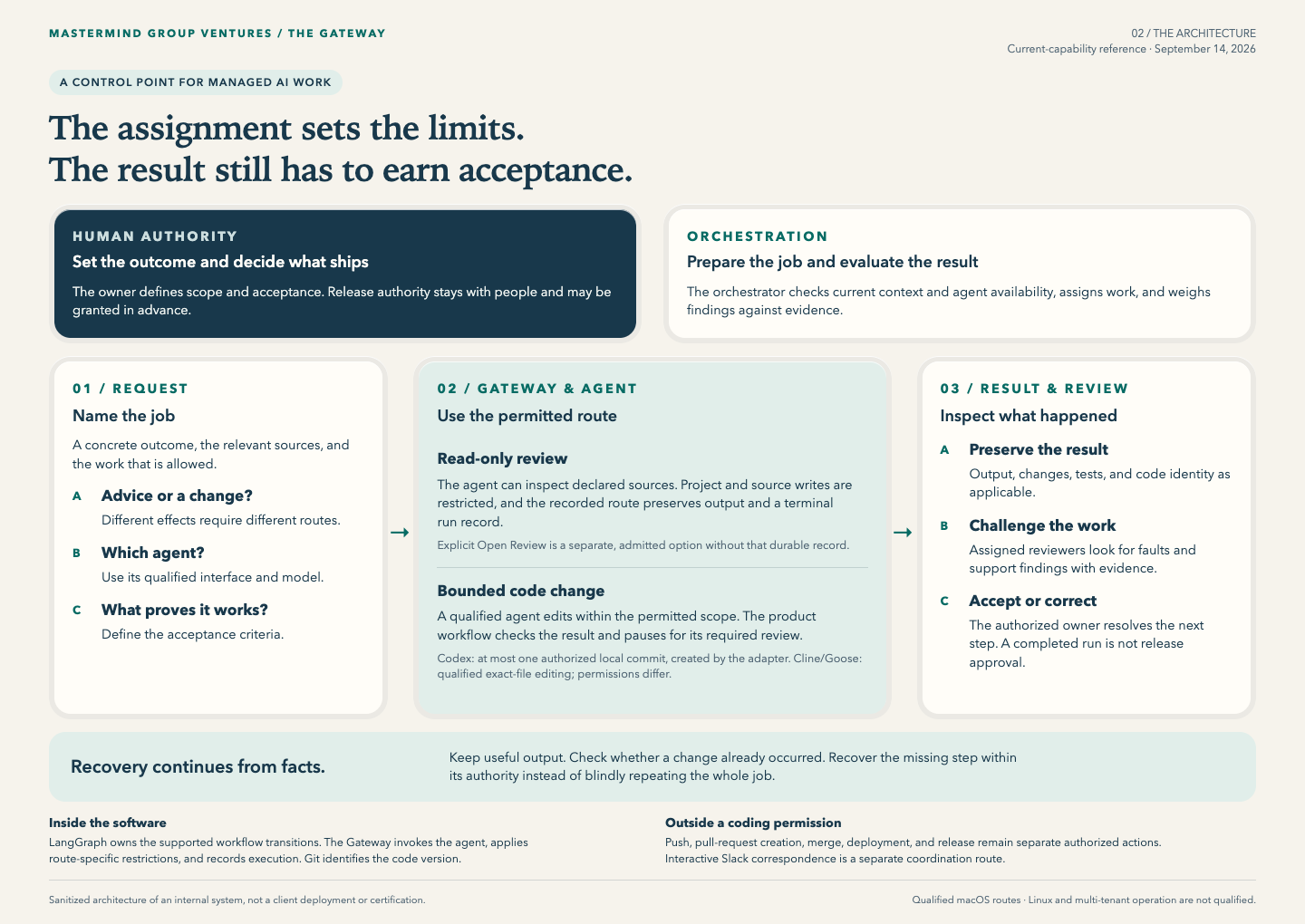
Open the responsive architecture explanation
AI-assisted delivery needs limits and a release decision that remain clear. The Gateway separates read-only review, limited code changes, and release authority so a completed technical step is not mistaken for approval.
LangGraph coordinates supported workflow transitions. The Gateway sets limits on what an agent may change and records the result; Git identifies the code version.
One governed workflow edited a permitted file, created a specifically authorized local commit, completed acceptance testing, and received independent review.
Current result and limit
A person decides whether the work is ready to release. Current evidence covers workflows tested in MGV's macOS environment and bounded tests.
This does not establish a client deployment, certification, or ready-to-install enterprise product.
Application engineering
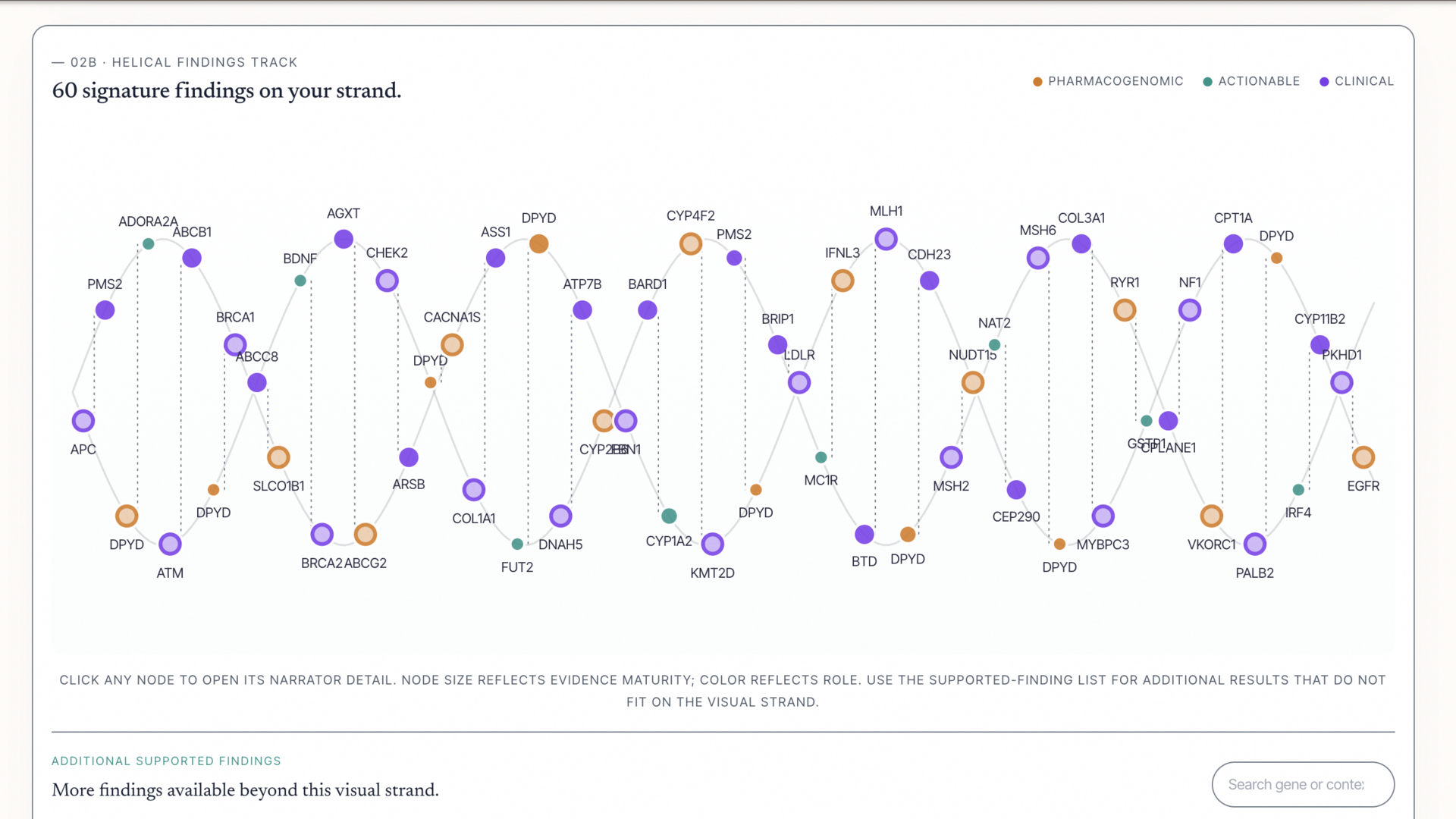
An architecture that connects genetic information with understanding.
An MGV work sample created for a family member's business, not an independent client endorsement.
See the application work sample